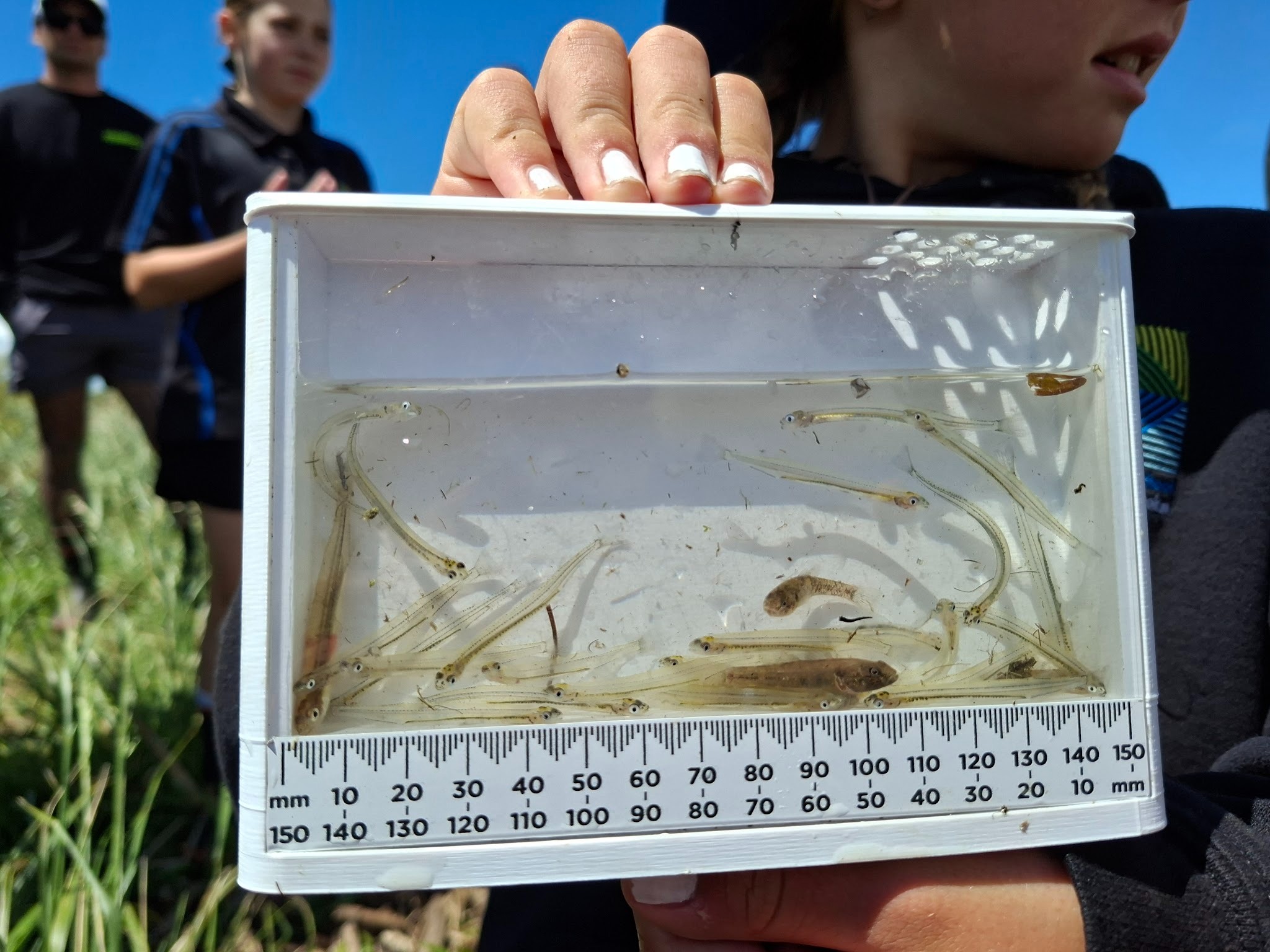
When people think of whitebait, they often picture tiny translucent fish swimming upstream, ready to be made into a fritter. Whitebait are not a single species, but the young of five native fish species found in Aotearoa and in this story, we shine a light on the remarkable: īnanga. Few people know the most important moments in an īnanga's life happen hidden amongst grasses at the edge of a waterway. Their lives connect rivers, wetlands, lakes, and the sea. After hatching, their larvae are carried downstream and out into the ocean. Months later, they return as whitebait, making their way back into freshwater systems where they will grow, mature, and eventually spawn.
It is an extraordinary journey for such a small fish.
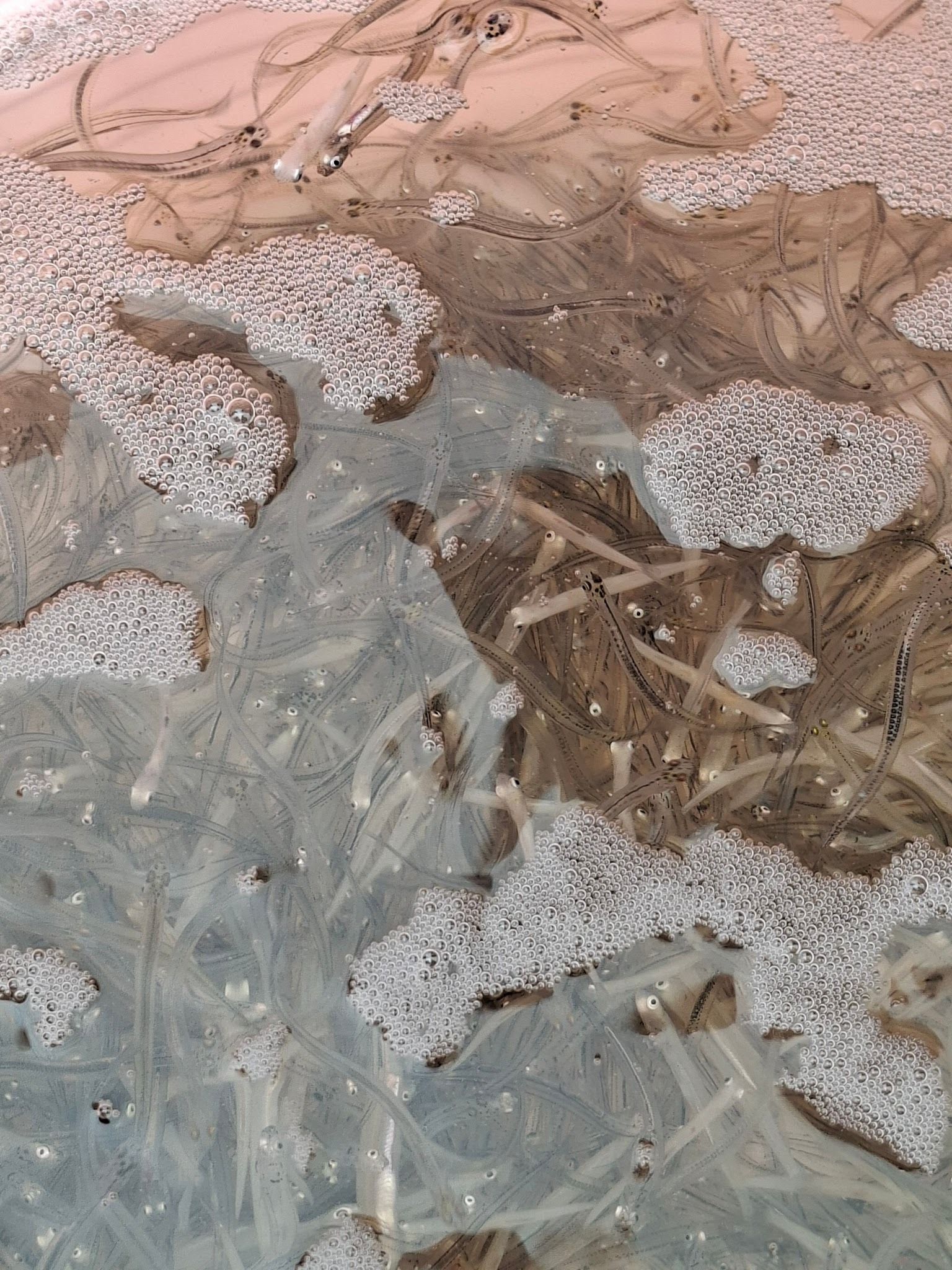
As part of the Mountains to Sea Wellington Whitebait Connection programme, we've been working with communities around Wairarapa Moana to learn more about these fascinating fish and the habitats they rely on. For generations, Wairarapa Moana has provided important habitat for īnanga. The wetlands, waterways, and lake margins form part of a complex network that supports native fish and countless other species. For mana whenua, these waters are woven into the cultural, ecological, and historical fabric of the region.
Yet, there is still much we do not know.
Over the past year, we have walked waterways, searched through vegetation, monitored environmental conditions, and spoken with local communities about their observations and experiences. We set out to better understand where īnanga may be spawning around Wairarapa Moana and what conditions support them. We discovered that finding īnanga spawning sites is not easy. Their eggs are tiny, often hidden deep within vegetation, and remain only a short time. Despite our efforts, we have not yet located spawning eggs. At first, that might sound disappointing. But in science, not finding something can be just as valuable as finding it.
Every survey helps build a clearer picture of the landscape. Every site visited helps narrow the search. Every conversation adds to our collective understanding of the Moana and the species that depend on it. Perhaps most importantly, this work has helped people see these waterways differently. Places that once seemed ordinary suddenly become important habitats. A strip of grass along a stream edge is no longer just vegetation. It could be part of a nursery that supports future generations of īnanga.
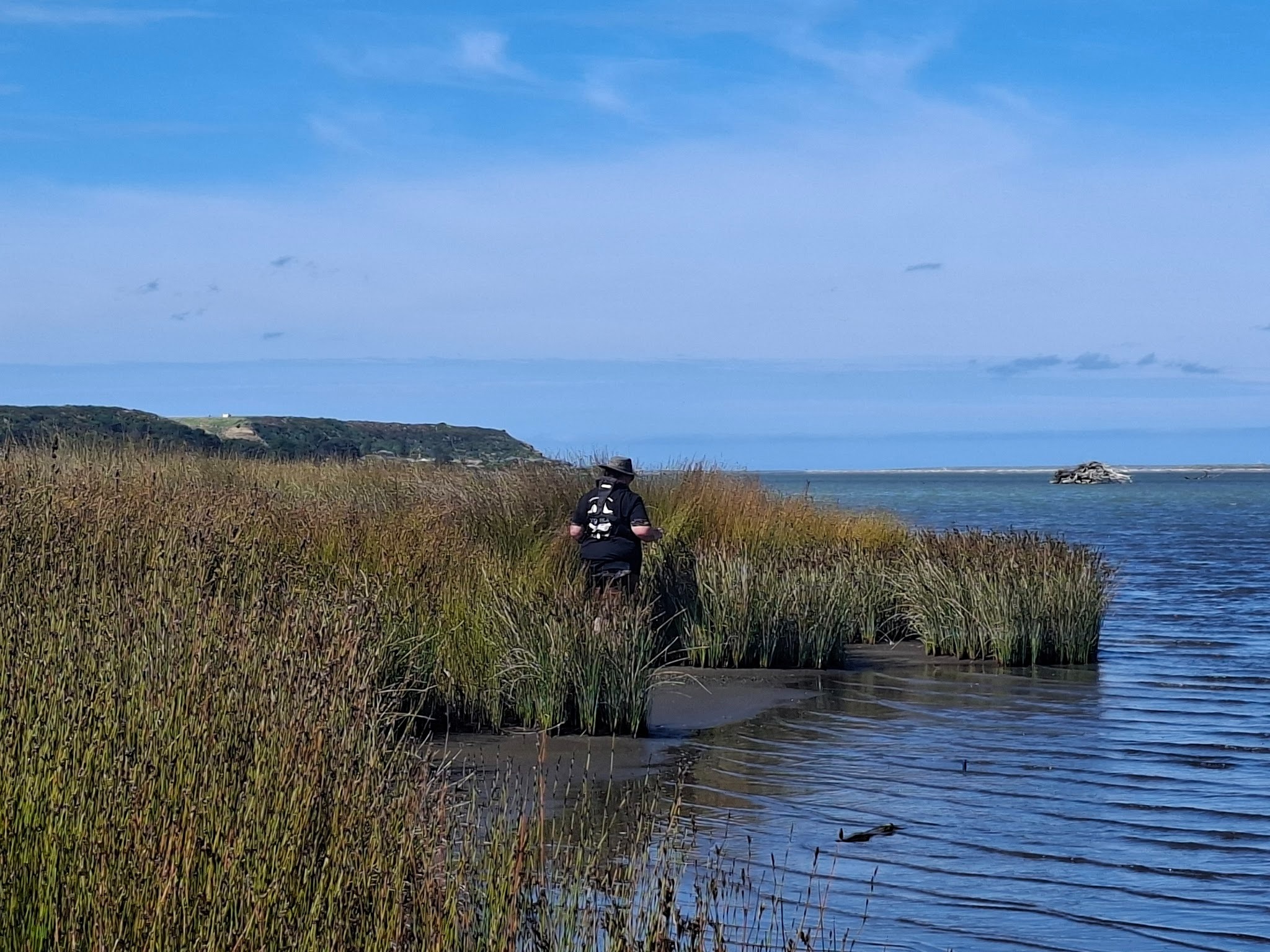
The search for īnanga is really a search for connection. Connection between freshwater and the sea. Connection between people and place. Connection between scientific knowledge, mātauranga Māori, and community experience. The story of īnanga at Wairarapa Moana is still being written.
There are questions we have yet to answer and places we have yet to explore. But every step brings us closer to understanding how these small fish use the landscape and how we can better care for the habitats they need. For Mountains to Sea Wellington, this work is about curiosity, collaboration, and stewardship. By helping communities discover the hidden lives of īnanga, we hope to inspire a deeper connection with the waterways that sustain us all. Sometimes the most important discoveries are not the ones we make immediately. Sometimes they begin with a question, a careful search, and a willingness to keep looking.